

This mini-course teaches two main tools to help understand, monitor, and manage the stress that comes along with being a caregiver. When a caregiver identifies emotions, triggers, and what can and cannot be controlled, the situation can be managed in a healthier way to reduce stress and hopelessness.
“Stress is not what happens to us. It’s our response to what happens. And response is something we can choose.”
– Maureen Killoran
Learning to manage caregiver stress offers you a range of physical, mental, and emotional benefits that can contribute to your overall well-being and quality of life. Some key benefits of stress management include:
- Improved Physical Health:
- Lowered Blood Pressure: Effective stress management can help regulate blood pressure, reducing the risk of hypertension and related heart problems.
- Enhanced Immune Function: Chronic stress weakens the immune system, while managing stress helps strengthen it, making you less susceptible to illnesses.
- Reduced Risk of Chronic Diseases: Lower stress levels are associated with a decreased risk of chronic conditions such as cardiovascular diseases, diabetes, and autoimmune disorders.
- Better Mental and Emotional Health:
- Reduced Anxiety and Depression: Stress management techniques can alleviate symptoms of anxiety and depression, enhancing mental well-being.
- Enhanced Emotional Resilience: Learning to manage stress improves your ability to cope with challenging situations and recover from setbacks.
- Improved Mood: Effective stress management can lead to an overall uplift in mood and a more positive outlook on life.
- Enhanced Cognitive Function:
- Better Decision-Making: Reduced stress levels allow for clearer thinking and better decision-making, as stress often impairs judgment.
- Improved Concentration and Focus: Managing stress helps improve cognitive abilities, leading to better concentration, focus, and memory.
- Better Relationships:
- Improved Communication: Lower stress levels can lead to better communication skills, as stress often leads to irritability and misunderstandings.
- Increased Empathy: Effective stress management can help you become more understanding and empathetic toward others, improving relationships.
- Increased Productivity:
- Higher Efficiency: Lower stress levels lead to improved productivity as you can work more efficiently and effectively without the negative impact of stress-related distractions.
- Enhanced Sleep Quality:
- Better Sleep: Stress management techniques can lead to improved sleep quality and better sleep patterns, which are crucial for overall health.
- Lowered Risk of Burnout:
- Reduced burnout risk: Managing stress can help prevent burnout by providing you with the tools to balance work, personal life, and self-care effectively.
- Improved Quality of Life:
- Increased Enjoyment: Learning to manage stress allows you to fully engage in and enjoy daily activities without being overwhelmed by stressors.
- Greater Life Satisfaction: A reduction in stress contributes to an overall sense of satisfaction and contentment with life.
What you’ll get with this course:
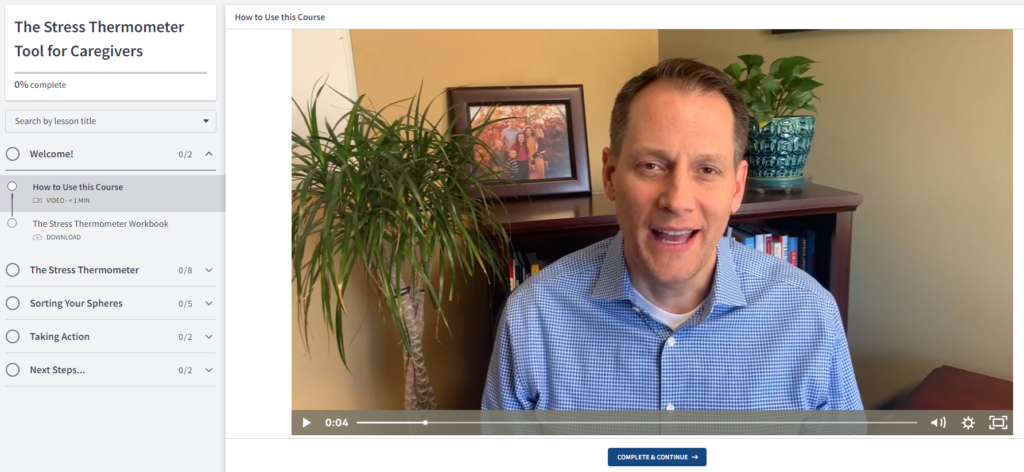
- Mini-Course with 3 lessons (30-45 minutes to complete)
- The Stress Thermometer
- Observing feelings
- Mind & body connections
- Identifying triggers
- Sorting Your Spheres
- Exploring what is controllable
- Taking Action
- Creating an action plan
- The Stress Thermometer
- Downloadable Workbook
- Complete the activities
- Take additional notes
- Access to the Community for Caregivers Facebook Group